
Choosing a Modern Dental Practice With Advanced Technology for Patient Convenience & Comfort
What to Look For in Today’s Advanced Dental Care
Choosing a dental practice near you is about more than convenience and friendly staff (though those certainly matter). In today’s rapidly evolving healthcare landscape, the technology a dental office uses can dramatically impact your experience, treatment outcomes, and even your willingness to keep up with regular appointments.
If you’ve been putting off dental care because of past negative experiences, or if you’re simply looking for a practice that offers the most current approaches to oral health, understanding what modern dental technology can do for you is the first step. Here’s your guide to identifying a truly modern dental practice and knowing which questions to ask.
Contact Citrus Smiles Dental Studio today to schedule your appointment at our Murphy dental office: (972) 472-8862, Wylie dental office: (972) 474-3849, Heath dental office: (972) 433-6500, Lucas dental office: (214) 785-8271, or our Irving dental office: (469) 845-9855. Discover how advanced technology can transform your dental care experience
Why Dental Technology Matters More Than You Think
Technology in dentistry isn’t just about having the latest gadgets. The right tools can mean the difference between a diagnosis caught early and one that requires extensive treatment later. They can transform a procedure that once required anesthesia into one that doesn’t. They can turn a two-hour appointment into a thirty-minute visit.
When evaluating dental practices in the Dallas-Fort Worth area, whether you’re in Irving, Murphy, Wylie, Heath, or Lucas, the technology they invest in tells you something important: they’re committed to providing care that prioritizes your comfort, safety, and time.
Six Essential Technologies Every Modern Practice Should Offer
1. Ask About Their Imaging Capabilities
 What to look for: Digital radiography that provides instant results with reduced radiation exposure.
Traditional film-based imaging is outdated for good reason. Modern practices should use digital systems that capture images immediately, allowing your dentist to review and discuss findings during the same appointment. This eliminates the anxious waiting period and enables faster treatment decisions.
The radiation reduction is substantial. If you have concerns about X-ray exposure, particularly if you’re pregnant or have children who need dental care, this technology offers peace of mind without compromising diagnostic quality.
Questions to ask your potential dentist:
- Do you use digital imaging exclusively?
- How much radiation reduction does your system provide compared to traditional X-rays?
- Can I see my images during my appointment?
2. Look for Visual Communication Tools
What to look for: Technology that lets you see inside your own mouth in real-time.
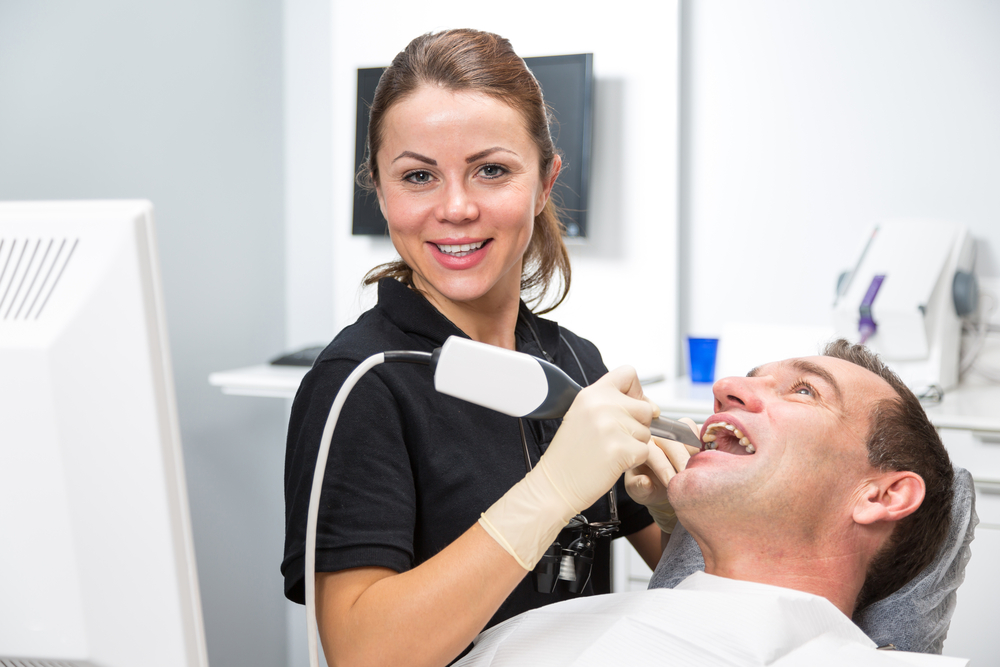
One of the biggest barriers to dental treatment is the trust gap. When your dentist tells you there’s a problem, but you can’t see it yourself, it’s natural to wonder if the treatment is truly necessary. Modern practices bridge this gap with small intraoral cameras that capture detailed images of your teeth and gums, displaying them on screens where you can see exactly what your dentist sees.
This isn’t just about trust. Visual tools help you understand your oral health in ways that verbal explanations simply can’t match. When you can see the early signs of decay or gum disease yourself, you’re more likely to take preventive action seriously and feel confident in treatment recommendations.
Questions to ask your potential dentist:
- Will I be able to see images of my teeth during examinations?
- How do you help patients understand their diagnosis visually?
- Do you save these images for tracking changes over time?
3. Verify Their Advanced Diagnostic Imaging
 What to look for: Three-dimensional imaging capabilities for complex treatment planning.
Not every patient needs advanced 3D imaging, but knowing your practice has this capability matters. If you’re considering dental implants, dealing with impacted teeth, or need evaluation for TMJ disorders, standard two-dimensional X-rays may not provide enough information for optimal treatment planning.
Three-dimensional cone beam imaging offers a complete view of your dental anatomy, including bone density, nerve pathways, and sinus cavities. This comprehensive perspective allows for more accurate diagnoses and better surgical outcomes when procedures are necessary.
Questions to ask your potential dentist:
- Do you have 3D imaging available on-site?
- In what situations would you recommend this type of imaging?
- How does this technology improve treatment outcomes?
4. Inquire About Precision Treatment Planning
What to look for: Computer-guided systems for surgical procedures, especially implants.
If you’re facing tooth replacement, the precision of implant placement significantly affects both the immediate success of the procedure and the long-term durability of your restoration. Computer-guided technology uses digital planning to map out the exact position, angle, and depth of implant placement before surgery even begins.
This level of planning translates to shorter procedures, more predictable results, and faster healing. It also means your dentist can identify potential complications before they occur, rather than discovering issues mid-procedure.
Questions to ask your potential dentist:
- Do you use computer-guided technology for implant placement?
- How does this affect my procedure time and recovery?
- What are the success rates with this technology compared to traditional methods?
5. Consider Comfort-Focused Treatment Options
What to look for: Alternatives to traditional drilling, like air abrasion, for cavity treatment.
Dental anxiety is real, and for many people, the sound and sensation of dental drills are major triggers. Progressive practices offer alternatives that use streams of fine particles to remove decay without the noise, vibration, and heat associated with conventional drilling.
This approach is particularly valuable for minor cavities, where the gentler method can often eliminate the need for anesthesia altogether. For patients who avoid dental care due to anxiety or parents looking for less intimidating options for their children, this technology can be transformative.
Questions to ask your potential dentist:
- What alternatives to traditional drilling do you offer?
- Am I a good candidate for drill-free cavity treatment?
- How does this affect the need for anesthesia?
6. Expect Modern Impression Technology
Traditional dental impressions were messy and could be uncomfortable for patients.
What to look for: Digital scanning instead of traditional impression materials.
If you’ve ever needed a crown, dental bridge, or an orthodontic aligner, you’ve likely experienced traditional impressions: trays filled with putty-like material that trigger gagging and discomfort. Modern practices have moved beyond this outdated approach.
Digital impression systems use handheld scanners to create precise 3D models of your teeth in minutes. The experience is comfortable, the results are more accurate, and the turnaround time for your final restoration is often faster since digital files can be instantly transmitted to dental laboratories.
Questions to ask your potential dentist:
- Do you use digital impression technology?
- How does this improve the accuracy of my restorations?
- Will this reduce the number of appointments I need?
Beyond Technology: What Else Matters
While technology is a crucial indicator of a modern practice, it’s not the only factor in choosing where to receive your dental care. The best practices combine advanced tools with:
- Transparency about costs and treatment options. Technology should enhance communication, not complicate it.
- A patient-centered approach. Advanced tools are only valuable when they’re used with your comfort, concerns, and goals in mind.
- Continuing education and innovation. Dentistry evolves rapidly. Practices that invest in current technology typically also invest in ongoing training and education for their entire team.
- Accessibility and convenience. Multiple locations, flexible scheduling, and efficient appointments all contribute to making dental care fit into your busy life.
Making Your Decision
When you’re evaluating dental practices, don’t hesitate to ask detailed questions about the technology they use and why. A truly modern practice will be proud to discuss their capabilities and happy to explain how their technology benefits you specifically.
Pay attention to how questions are answered. Are explanations clear and patient-focused, or do they rely on technical jargon? Does the practice seem genuinely interested in addressing your concerns and priorities?
Remember that the goal isn’t to find the practice with the most equipment, but rather the one that thoughtfully integrates technology to provide safer, more comfortable, and more effective care.
Experience Modern Dentistry Near You in North Texas
At Citrus Smiles Dental Studio, Dr. Mahima Gupta, Dr. Gur Simran Aurora, and our team are committed to providing dental care that reflects the best of what modern technology has to offer. We believe that informed patients make better decisions about their oral health, which is why we’re always happy to discuss our approach and answer your questions.
Whether you’re seeking a new dental home or simply exploring your options, we invite you to experience the difference that modern dental technology near you can make.
Schedule a consultation at one of our convenient locations:
- Murphy: (972) 472-8862
- Wylie: (972) 474-3849
- Heath: (972) 433-6500
- Lucas: (214) 785-8271
- Irving: (469) 845-9855
Serving families throughout Murphy, Wylie, Heath, Lucas, Irving, Plano, Richardson, Allen, and surrounding North Texas communities.