
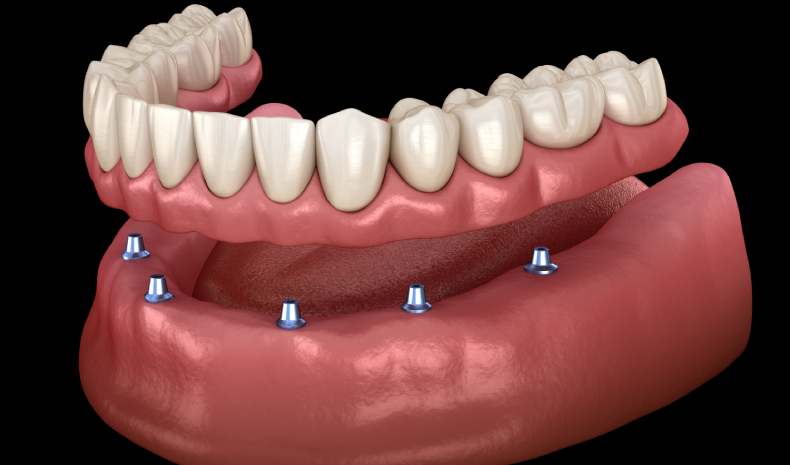
Implant-Supported Dentures in Murphy, Wylie, Heath, Lucas & Irving, TX
Loose dentures are not just an inconvenience. They cause sore spots, change the way you eat, and make you self-conscious in conversation. Over time, they contribute to jawbone loss because they do nothing to replace the stimulation a tooth root provides. If you have been living with dentures that slip, click, or require adhesive to function, denture stabilization is worth a real conversation. At Citrus Smiles Dental Studio, we offer implant-supported denture stabilization at all five locations in Murphy, Wylie, Heath, Lucas, and Irving, TX. Patients from Allen, McKinney, and Frisco come to us because we handle the dental implant placement and the prosthetic work in-house. Call us and let’s talk about what your options look like.
Contact us now at 972-472-8862 (Murphy), 972-474-3849 (Wylie), 972-433-6500 (Heath), 214-785-8271 (Lucas), or 469-845-9855 (Irving) to book your visit and start protecting your smile!
Implant-Supported Dentures at Citrus Smiles: Everything Under One Roof
For many patients, the frustrating part of pursuing implant-supported dentures is the coordination between providers. At Citrus Smiles, that is not an issue. We handle the full process in-house across all five locations, from cone beam imaging and implant placement to attachment fitting and final adjustments.
Dr. Mahima Gupta, DDS, FAGD, brings fellowship-level implant training to every case, and Dr. Neil Patel, DDS, adds advanced restorative depth for more complex prosthetic work. You work with the same team from start to finish, which means nothing gets lost between appointments and your treatment stays on a coherent timeline. We accept most PPO plans, offer financing through CareCredit, and have an in-house membership plan for patients without coverage.
What Is Denture Stabilization?
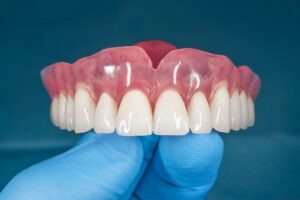 Denture stabilization is the process of anchoring an existing or new denture to dental implants so it stays securely in place during eating, speaking, and all normal daily activities. Instead of relying on suction against the gums or denture adhesive, the denture attaches directly to implant posts placed in the jawbone. The implants act as artificial tooth roots that hold the denture firmly and, as a secondary benefit, stimulate the jawbone to slow or stop the bone resorption that occurs when natural roots are gone.
There are two main approaches: removable snap-on dentures that click onto the implants and can be taken out for cleaning, and fixed implant-supported dentures that are permanently attached and require more implants to support the arch. Which option fits best depends on the number of implants you are able to place, your preference for cleaning method, and the condition of your jawbone.
Why Standard Dentures Become Problematic Over Time
A conventional denture rests on the gum ridge. When that ridge shrinks, which it does continuously without tooth roots to stimulate it, the denture no longer fits the same way. Within a few years, most full denture wearers notice the fit has changed. The edges irritate the gums. Chewing becomes less effective because the denture moves under pressure. Adhesive becomes a daily routine, and even then, the seal is imperfect.
This is not a flaw in how the denture was made. It is what happens when a removable appliance sits on a jaw that is slowly changing shape underneath it. Implant-supported denture stabilization addresses the root issue by giving the denture something solid to attach to and by giving the jawbone the stimulation it needs to maintain its structure.
Types of Denture Stabilization
Implant-Retained Snap-On Dentures
Two to four implants are placed in the jawbone, and the denture is fitted with attachments that snap onto the implant posts. The denture stays in place during use but can be removed by the patient for cleaning. This is a more affordable entry point to implant-supported prosthetics and works well for patients who prefer the option of removing the denture at night. Snap-on dentures offer significantly more stability than a conventional denture without the complexity of a fully fixed restoration.
Fixed Implant-Supported Dentures
Four to six or more implants support a full arch that is permanently attached and cannot be removed by the patient. Cleaning is done with a water flosser and special brushes around and under the prosthetic. This approach provides the highest level of function and most closely mimics natural teeth. Patients who want the most stable, tooth-like result tend to prefer this option.
Denture Relining
In some cases, stabilization can be partially addressed through relining, which involves adding new material to the base of an existing denture so it conforms more accurately to the current shape of the gums. Relining does not address bone loss, but it can improve fit for patients whose jawbone changes have made their current denture uncomfortable. We often discuss this as a short-term option while patients consider the implant route.
Benefits of Implant-Supported Denture Stabilization
The difference between a conventional denture and an implant-supported one is felt in everyday moments: meals, conversations, laughing without thinking about it. The practical benefits include:
Dentures that stay in place during eating and speaking without adhesive
- Elimination or significant reduction of sore spots caused by denture movement
- Jawbone preservation through the stimulation that implant posts provide
- Improved ability to eat a wider range of foods
- Greater confidence in social situations without worrying about denture movement
- Better long-term facial structure because bone is maintained rather than lost
- More durable and stable than conventional dentures over time
The Denture Stabilization Process at Citrus Smiles
The process moves through a predictable sequence from imaging to final fit. Here is what to expect at each stage:
- Consultation and Imaging: We take cone beam 3D scans to assess your bone density, jaw structure, and the fit of your current denture
- Treatment Planning: We determine the number of implants needed and whether any preparatory work, like bone grafting, is required
- Implant Placement: Implant posts are placed surgically under local anesthesia or sedation; healing typically takes two to four months
- Attachment Fitting: Once implants are integrated, your denture is fitted with the attachment components that connect to the implants
- Final Adjustments: We check the fit, bite, and comfort, and make any needed adjustments so the final result is stable and comfortable
Can Your Existing Denture Be Used?
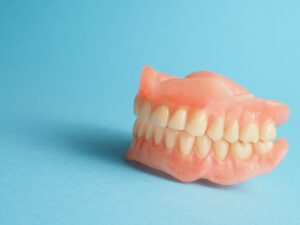 Sometimes, yes. Whether your current denture can be modified to work with implant attachments depends on the condition of the denture, how well it fits your current gum ridge, and whether its shape is compatible with the implant positions. We will evaluate your existing denture at your consultation. If it is too worn, poorly fitting, or structurally incompatible, we will recommend a new denture as part of the treatment plan. In many cases, though, a well-maintained existing denture can be retrofitted to work with implants, which reduces overall cost.