
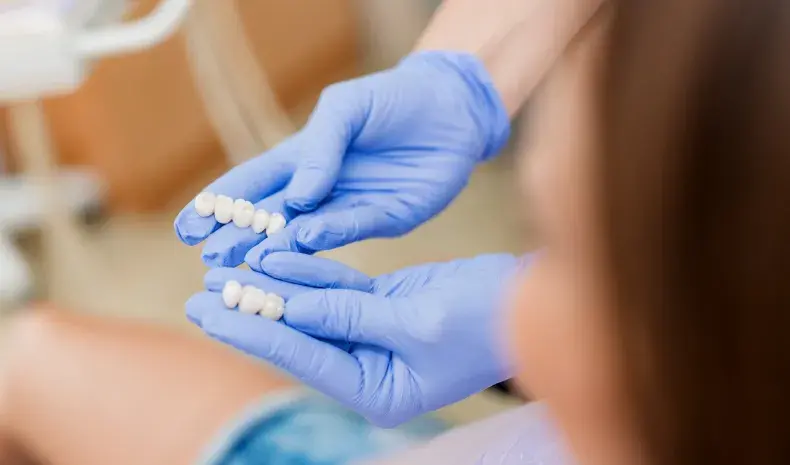
Complete Your Smile with Fixed Tooth Replacement
Missing teeth can affect far more than just your appearance—they impact how you eat, speak, and feel about yourself. At Citrus Smiles Dental Studio, Dr. Aurora offers custom dental bridges that permanently replace one or more missing teeth with natural-looking, fully functional restorations. Unlike removable dentures, bridges are fixed in place, giving you the confidence to eat your favorite foods and smile without worry.
A dental bridge literally bridges the gap left by missing teeth. It consists of artificial teeth (called pontics) anchored by crowns on the adjacent natural teeth or dental implants. The result is a seamless restoration that blends beautifully with your existing teeth while restoring complete function to your bite.
If you’re tired of living with gaps in your smile or struggling with the inconvenience of missing teeth, a dental bridge may be the ideal solution. We serve patients throughout Murphy, Wylie, Heath, Lucas, Irving, and Southlake with personalized restorative care. Ready to explore your options? Reach out to one of our top-rated Texas dental clinics and let’s discuss how we can restore your smile.
What Makes Citrus Smiles Dental Studio Different
Our commitment to precision and quality ensures your bridge looks natural and lasts for years.
- Lab-crafted restorations designed by skilled technicians to match your tooth color, shape, and bite perfectly
- Conservative preparation approach that preserves as much healthy tooth structure as possible while ensuring a secure fit
- Versatile bridge options, including traditional, cantilever, Maryland, and implant-supported designs for different situations
- Digital impression technology that creates more accurate, comfortable restorations compared to traditional molds
- Skilled placement and adjustment by Dr. Aurora, who fine-tunes each bridge for optimal comfort and function
What Is a Dental Bridge?
A dental bridge is a fixed dental restoration that replaces one or more missing teeth by anchoring artificial teeth to the natural teeth or implants on either side of the gap. The bridge consists of two or more crowns on the supporting teeth (called abutments) and the replacement teeth in between (called pontics).
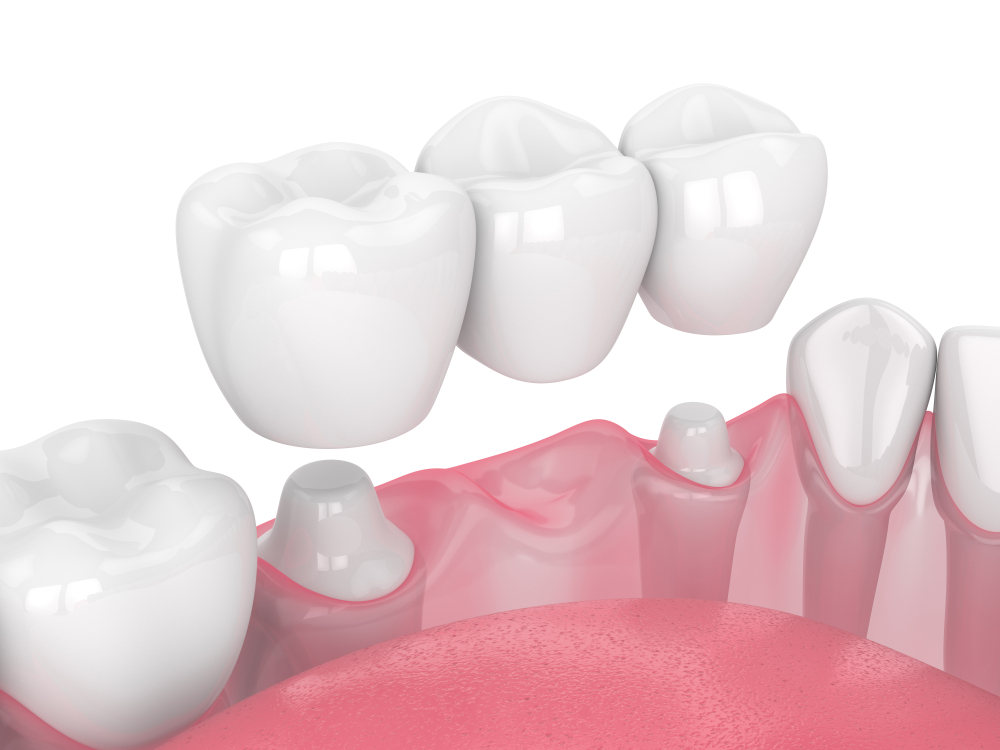
These components are fused together into a single unit that’s permanently cemented in place. Bridges restore your smile’s appearance, maintain proper tooth alignment, distribute bite forces evenly, and prevent remaining teeth from shifting into the empty space left by missing teeth.
Available Bridge Designs
Different bridge designs suit different clinical situations and patient needs.
- Traditional bridge: The most common type, using crowns on natural teeth on both sides of the gap to support the artificial teeth in between
- Cantilever bridge: Anchored by a crown on just one adjacent tooth, used when teeth are present on only one side of the gap
- Maryland bridge: A conservative option using a metal or porcelain framework bonded to the back of adjacent teeth without full crowns
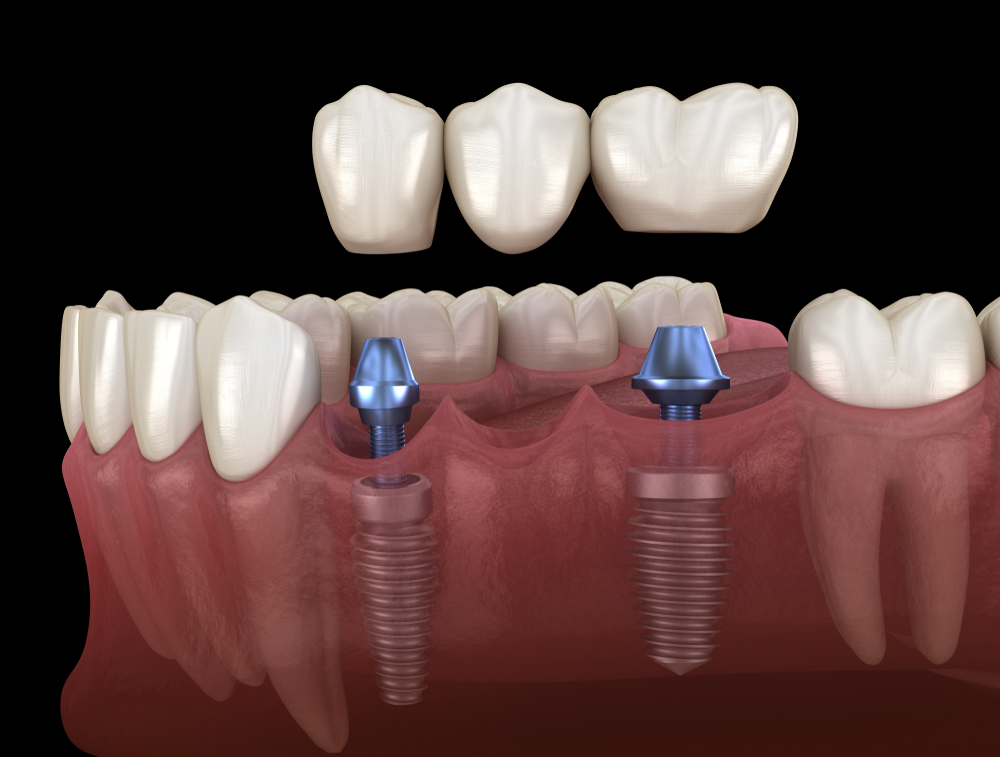
- Implant-supported bridge: Anchored by dental implants rather than natural teeth, ideal when multiple adjacent teeth are missing or when preserving natural teeth is preferred
- Fixed-removable bridge: A combination design that allows for easier cleaning while remaining securely attached, sometimes used in specific situations
- All-on-4 bridge: A full-arch restoration supported by four strategically placed implants, replacing an entire upper or lower set of teeth
Advantages of Choosing a Dental Bridge
Replacing missing teeth with a bridge offers significant benefits for your oral health and quality of life.
- Restores complete chewing function so you can eat a full range of foods comfortably without avoiding certain items due to missing teeth
- Improves speech clarity by filling gaps that may cause whistling sounds or difficulty pronouncing certain words clearly
- Prevents tooth shifting by maintaining proper spacing and keeping adjacent teeth from tilting or drifting into the empty space
- Maintains facial structure by supporting your lips and cheeks, preventing the sunken appearance that can develop with missing teeth
- Natural appearance with custom shading and contouring that makes your bridge virtually indistinguishable from your real teeth
- Fixed and stable, unlike removable dentures, so you never worry about slipping, clicking, or needing to take them out
- Preserves bite alignment by distributing chewing forces properly across your dental arch and preventing bite collapse
- Long-lasting solution with proper care, dental bridges typically last 10 to 15 years or longer before needing replacement
Ideal Candidates for Bridge Treatment
Dental bridges work well for many patients dealing with tooth loss, but certain conditions make you an ideal candidate.
- Anyone missing one to three adjacent teeth who wants a permanent, non-removable replacement option
- Patients with healthy, strong teeth on both sides of the gap that can support the bridge structure
- People who are looking for a more affordable alternative to dental implants, with faster treatment completion
- Those who want to avoid surgery or don’t have sufficient bone density for implant placement
- Patients seeking to prevent remaining teeth from shifting and maintain proper bite alignment
- Anyone experiencing difficulty chewing or speaking clearly due to missing teeth
- People self-conscious about gaps in their smile, who want a natural-looking restoration
Dental Bridge Procedure
Getting a dental bridge typically requires two appointments spaced a few weeks apart.
1. Initial Consultation and Examination
Dr. Aurora examines your mouth, takes X-rays, and evaluates whether the teeth adjacent to the gap are healthy and strong enough to support a bridge. We discuss your goals and explain the treatment process in detail.
2. Treatment Planning
We help you choose the right type of bridge for your situation and select the shade and style that will match your natural teeth. Digital photos and impressions may be taken for treatment planning.
3. Tooth Preparation
The supporting teeth are reshaped by removing a thin layer of enamel to make room for the crowns. We administer local anesthesia first so you remain comfortable throughout this process.
4. Impression Taking
Precise impressions of your prepared teeth are made using digital scanning or traditional molds. These impressions capture every detail needed to create your custom bridge in the dental laboratory.
5. Temporary Bridge Placement
A temporary bridge is placed to protect your prepared teeth and maintain aesthetics and function while your permanent bridge is being fabricated. This temporary restoration stays in place for two to three weeks.
6. Bridge Fabrication
Your impressions are sent to a skilled dental lab where technicians craft your custom bridge using high-quality materials matched to your specifications. This process typically takes two to three weeks.
7. Final Bridge Placement
At your second appointment, the temporary bridge is removed, and your permanent bridge is carefully fitted. Dr. Aurora checks the fit, bite, and appearance, making any necessary adjustments.
8. Cementation
Once everything is perfect, the bridge is permanently cemented in place using a strong dental adhesive. You leave our office with a complete, fully functional smile.
Maintaining Your Bridge for Longevity
Proper maintenance helps your bridge last longer and keeps your supporting teeth healthy.
- Brush at least twice daily with a soft-bristled toothbrush, paying special attention to where the bridge meets your gums
- Floss daily using a floss threader or special bridge floss to clean underneath the pontic and around the abutment teeth
- Use an antibacterial mouthwash to reduce plaque buildup around the bridge and keep your gums healthy
- Avoid chewing ice, hard candy, or other extremely hard foods that could crack or dislodge the bridge
- Don’t use your teeth as tools to open packages or bite non-food objects like pens or fingernails
- Schedule regular dental checkups and professional cleanings every six months to monitor your bridge and overall oral health
- Contact our office immediately if your bridge feels loose, if you notice any cracks, or if you experience pain around the supporting teeth
Missing teeth affecting your confidence or ability to eat comfortably? Let’s talk about bridge options. Contact Citrus Smiles Dental Studio, and we’ll create a restoration that fits your needs perfectly.
Dental Bridge Costs
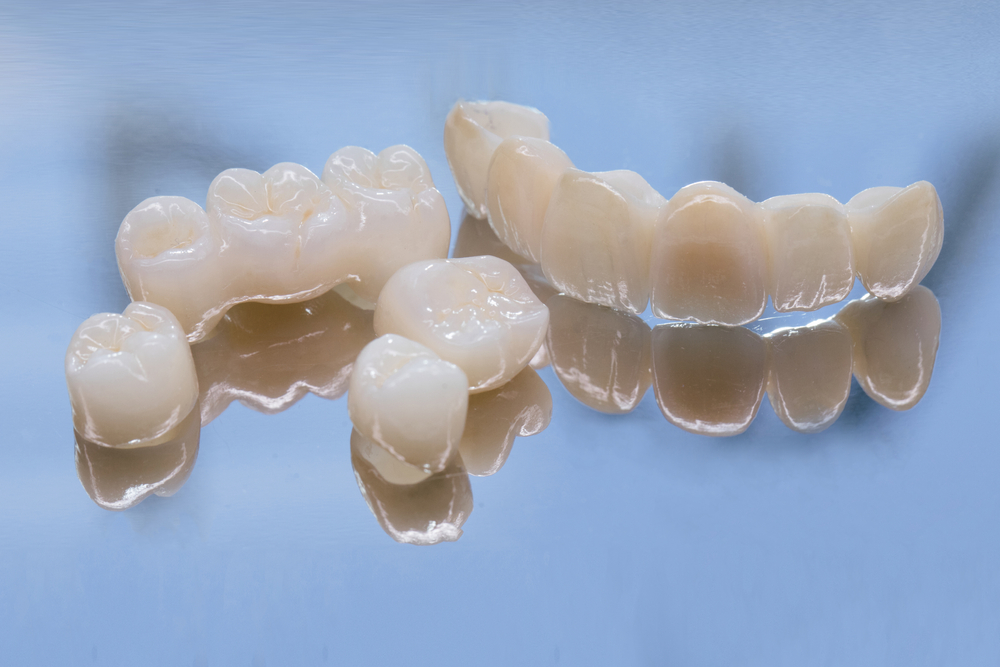
The cost of a dental bridge depends on the type of bridge, the number of teeth being replaced, and the materials used. Traditional bridges are generally more affordable than implant-supported options. Most dental insurance plans provide partial coverage for bridges since they’re considered a necessary restorative treatment.
- Traditional bridges typically cost between $2,000 and $5,000, depending on the number of teeth and materials used
- Maryland bridges generally range from $1,500 to $2,500 and require less tooth preparation
- Implant-supported bridges cost more, typically $3,500 to $6,500 per tooth, but don’t require altering natural teeth
- Dental insurance usually covers 40% to 50% of bridge costs after your deductible is met
- We offer flexible financing through CareCredit and other payment plans with low monthly installments to fit your budget
What You Should Know Before Deciding
While dental bridges are excellent tooth replacement options, they do require alteration of adjacent healthy teeth to serve as anchors. The supporting teeth need crowns, which means removing enamel that cannot be replaced. This is an important consideration, especially if those teeth are currently healthy and cavity-free. Bridges also require diligent cleaning underneath the pontic to prevent decay or gum disease around the abutment teeth.
Other Tooth Replacement Options
- Dental implants that replace individual teeth without affecting adjacent teeth, though they cost more and require surgery with a longer healing time
- Partial dentures are removable and more affordable, but less stable and comfortable than fixed bridges
- Implant-supported dentures for multiple missing teeth, offering stability without anchoring to natural teeth
Potential Complications
- Increased sensitivity in the abutment teeth after preparation, usually temporary but occasionally lasting longer
- Potential for decay or gum disease around the supporting teeth if oral hygiene around the bridge is inadequate
- Risk of bridge failure if supporting teeth become damaged, decayed, or lose bone support over time
- Slight change in bite or speech during the initial adjustment period, typically resolving within a few days